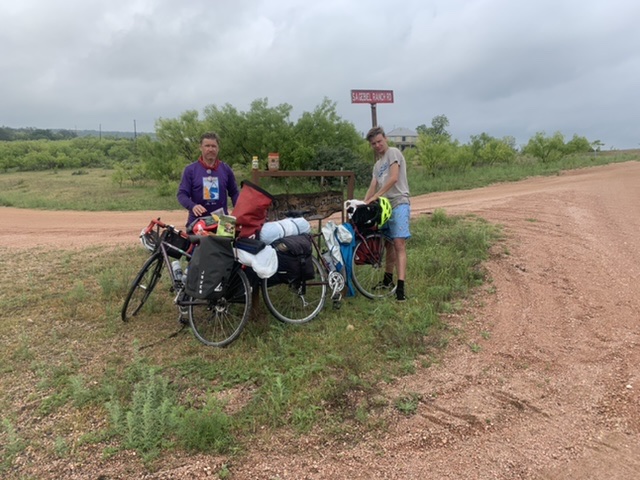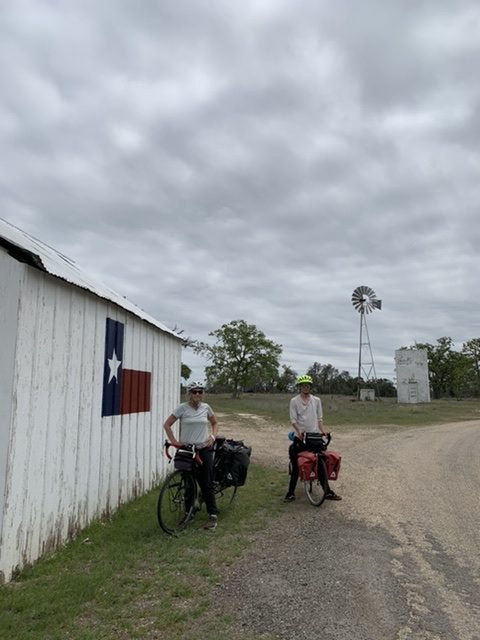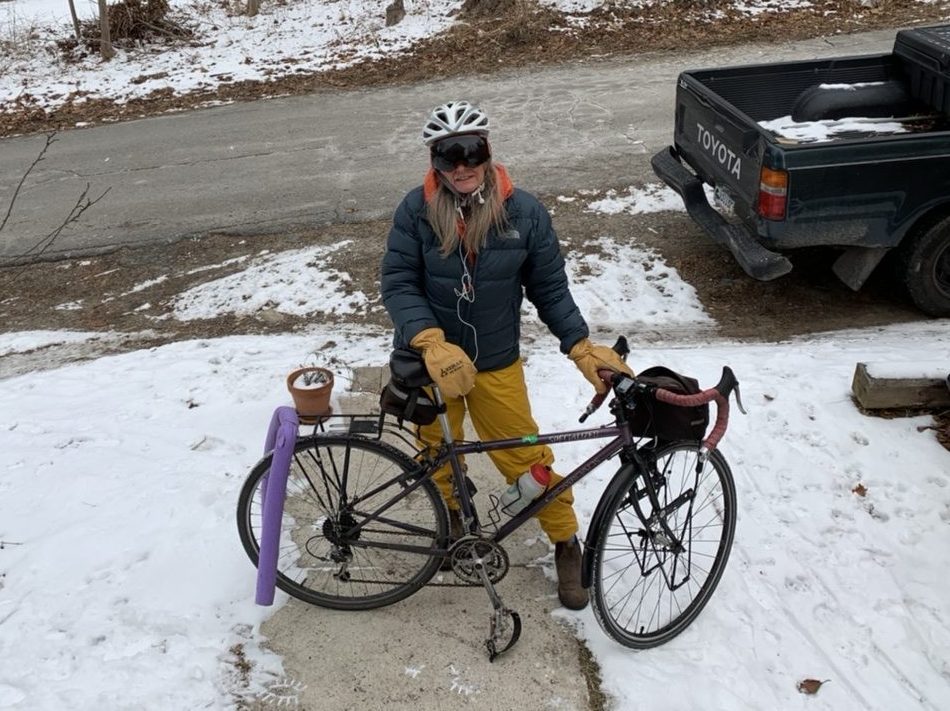
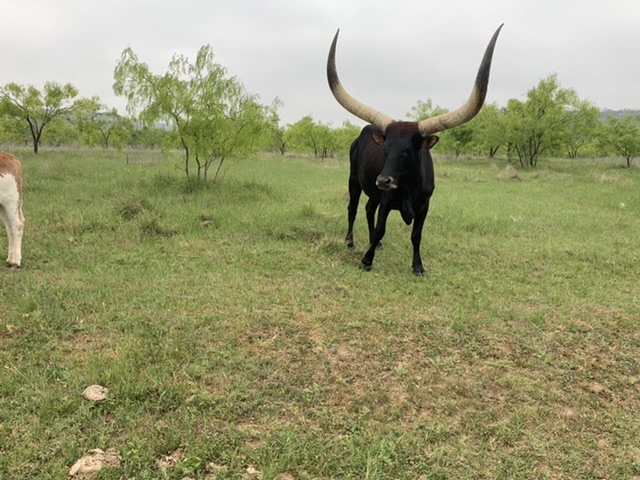
I have to be honest, before this biking adventure, I had never given the landscape of Texas much thought. I have always just thought of it as a wide, barren, hot expanse, connecting the green humid swamps of Louisiana to high, red mesas of New Mexico and plains to the north. Texas was only somewhere to drive through—with the air conditioning on. Well, I have learned the error of my ways.  For the last nine days, my husband, teenage son, and I have cycled 425 miles along the Transamerican Cycling Association’s Texas Hill Country route, performing a loop beginning and ending in Austin. We biked along ranch and farm roads, through wine country (who knew?), cattle land and desert, and I have learned that there is a whole lot more to Texas than I had reckoned. Texas is a land of extremes. In late April, the Hill Country temperatures reel between nearly 90 by day to 40 at night. The sky is pierced by the searing sun one moment, soft spritzing rain the next, and then with crescendos of towering cumulous clouds rising up majestically, rivaling the size of the enormous western sky. There are wild flowers covering the land. Blue Bonnets, of course, but also bright red and yellow-ringed Indian blankets, white tissue-paper like Texas prickly poppies whose blossoms rise up out of spiny, overly-protective leaves, brown-eyed Susans, purple asters and countless others. They bow, wave, quake, and salute along the roadsides and at times as far as the eye can see, demanding attention. Demanding one to slow down and notice. Then there are the fields with no flowers, only flattened grass and cactus—eaten to nubs by various herds. The fields are filled with long-horned cattle, horses, burros, sheep, and goats, all munching away at their leisure, not seeming to be remotely aware of their power, starting like kittens when we sped by. Wildlife abounds too, and we saw lizards and owls, deer and armadillos, coyotes and wild hogs, with which we enjoyed mutual staring contests at close range, one slow, lazy blink at a time. Of course there are ranches. Many of them looking like settings for the lifestyles of the rich and famous. They covered thousands of acres and had proud gated entrances along the road marked with their signature names—gold embossed. But, here and there nestle small towns along riverbanks—seeking the water, the green and the shade. In the Hill Country there is a strong German influence that rubs side by side with a Hispanic one. There are those that broadcast their politically conservative views with “Trump 2024” banners, and then there is the liberal artistic vibe of Austin. There are dammed lakes with cool welcoming water, that are the perfect balm after a long sweaty day of cycling. There are tall red rocks and mesas striped with limestone strata, orange granite and bright green juniper, mesquite, and live oak. Veritable rainbows. There are horribly ugly stretches of highway, subdivisions and ex-urban sprawl, but that can be found just about everywhere these days. Those areas were tempered by the miles and miles and miles of roads we rode on where we could ride no-handed, side-by-side, chatting for hours—nearly full days, without seeing another car or person, remembering who we are, what we love and how incredible this world can be. This part of Texas is neither barren nor flat—it is big, bold and hilly, my aching knees and saturated heart can attest to that. |